
Water leaking from a light fixture is one of the more alarming things to see in a house, right up there with a smoke detector chirping at 3am. It means water is already inside the ceiling, and it has found its way to an opening with wiring in it.
This post covers what to do first, where the water usually comes from, and what we found in a home in Carpinteria where an upstairs water heater failed and water came through the recessed lights on the floor below.
What to do first
- Turn off the power to that light at the breaker. Do not touch the fixture or the switch while water is coming through it.
- Stop the water. Shut off the fixture or appliance that is leaking, or the main water valve if you do not know the source.
- Catch what is dripping. Put a bucket or towels under it and move belongings out of the way.
- Do not poke holes in the ceiling yourself around a light that has water in it.
- Take photos of the fixture, the ceiling and anything that got wet, for your insurance claim.
- Have an electrician check the fixture and wiring before the light is used again.
Where the water usually comes from
- A water heater, washing machine or bathroom on the floor above
- A supply line or drain line running through the ceiling. If nobody can find which one, that is a leak detection job.
- A toilet, tub or shower leaking into the floor below it
- A roof leak or condensation from an air conditioning line, on the top floor
Recessed lights are often where the water shows up first because the housing is an opening in the drywall. Water running along the top of the ceiling finds that opening before it soaks through the rest of the drywall.
What we found in a home in Carpinteria
On this job, the seam of a water heater located upstairs failed. Water came through the recessed lights on the floor below, and the carpet in a closet was affected too. The homeowner was concerned about putting in a new water heater without knowing what kind of damage the flooring had taken.
October 6: readings on every surface
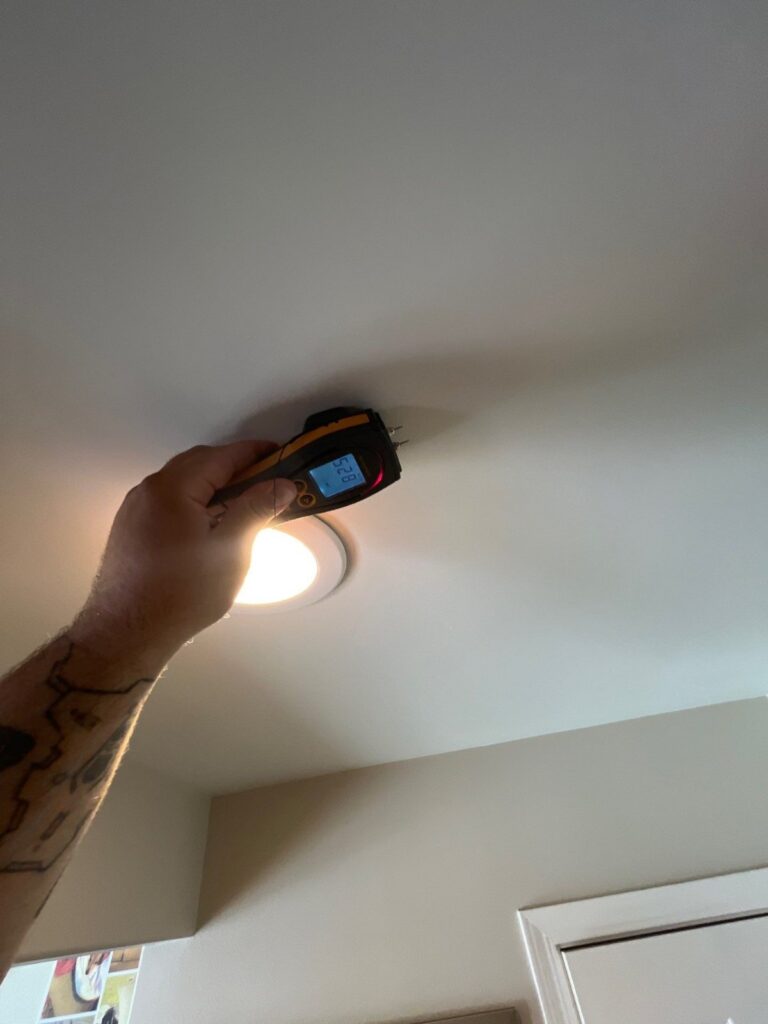
The first visit was about mapping the water. The photos show readings taken on the ceilings around the recessed lights, on the walls and along the floors, room by room. Tape was laid on the floors to mark areas, the carpet in the closet was pulled back, and air movers were set up.

October 8 to October 13: drying and more readings
A dehumidifier went in, and readings continued on the ceilings, walls and floors. By October 13, carpet had been removed in the affected areas and readings were being taken on the floor underneath.
October 15 to October 23: opening up
On October 15, the ceiling was opened and the bottom of the walls came out in the affected areas, with plastic containment set up. Some of the drywall that came out had dark water staining on the back side. Containment was still up through October 23 while the work continued.

Why the ceiling usually has to be opened
When water comes through a light, it has already run across the top of the drywall and soaked into the insulation and framing above. From below, the ceiling might only show a small stain, or nothing at all once it dries on the surface. Opening the ceiling is how you see how far the water went and dry it properly. The EPA’s guide to mold and moisture says water damaged areas should be dried within 24 to 48 hours to prevent mold growth, and that is hard to do with the ceiling closed.
Our post on water damage on the ceiling covers what a ceiling stain usually means, and our post on a leaking water heater covers the signs to watch for before a tank fails.
FAQ
Is water leaking from a light fixture dangerous?
It can be. Water and wiring do not mix. Turn off the power to that circuit at the breaker, stay away from the fixture and have an electrician check it before using it again.
Will the ceiling dry out on its own?
The surface may look dry in a few days, but the insulation and framing above can stay wet much longer. That is why readings matter more than how the ceiling looks. Our post on mold behind drywall shows what happens when wet materials stay closed up.
Can I replace the water heater before the damage is fixed?
You can, but it helps to know what condition the floor and framing under it are in first. That was exactly the question the homeowner on this job had, and the readings and the floor underneath answer it.
Water coming through a light or ceiling?
Total Restoration handles water damage restoration in Carpinteria and across Santa Barbara County, Ventura County and Santa Clarita. We find where the water went, open what needs to be opened and dry it properly. Contact us to get it checked.