
Most people think of a roof leak as a rain problem. You put a bucket under the drip, wait for the ceiling to dry, and move on. But mold after water damage does not wait for you to get around to it. Once water gets into drywall, insulation, or the wood framing behind your ceiling, the clock starts. And it moves faster than almost anyone expects.
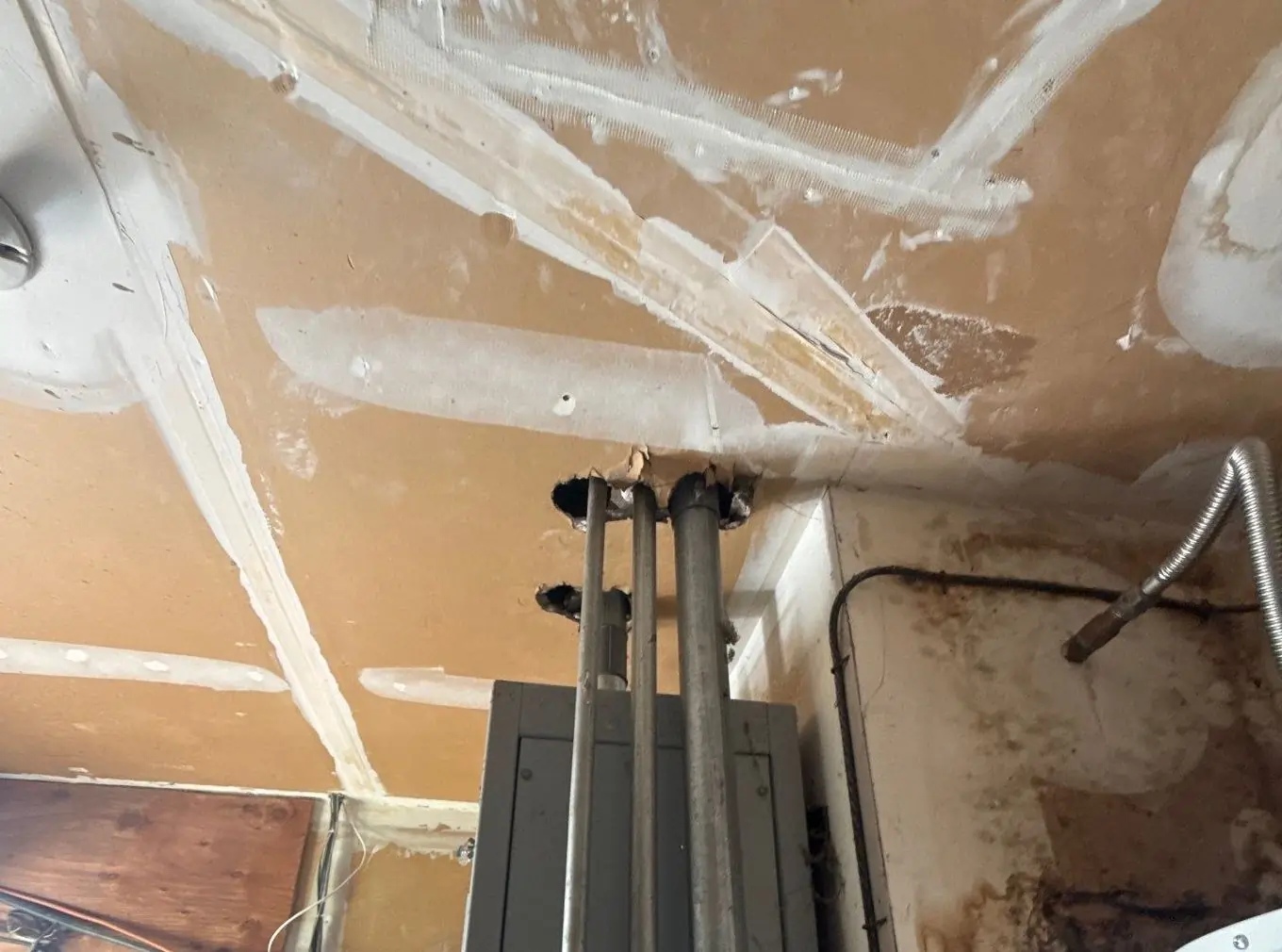
We got called out recently to a Camarillo condo where the owner suspected mold after a roof leak. They asked us to inspect the unit and put together an estimate, which is the same first step in any water damage restoration job. We walked the whole place and documented what we found across a few hundred photos, because in a shared-wall community, the details matter. That job is a good example of how a slow leak up top becomes a real problem down below, so we want to walk you through how it actually happens.
Mold After Water Damage Starts in the First 24 to 48 Hours
Here is the part that surprises folks. Mold does not need a swamp. It needs three simple things:
- Moisture, from a source that keeps materials wet instead of letting them dry.
- Something organic to eat, like drywall paper, wood, dust, and the glue in your building materials.
- A little time, which is the ingredient almost everyone underestimates.
General industry guidance, echoed by the EPA (Environmental Protection Agency) and restoration standards, puts the start of mold growth at roughly 24 to 48 hours after materials get wet and stay wet. Some spores get going even sooner in a warm, closed-up room.
A roof leak checks every box:
- The water is slow and quiet, so nobody rushes to dry it.
- It soaks into porous stuff that holds moisture for days.
- It usually sits in a dark cavity, the attic space, the wall, or above the ceiling tiles, where air does not move and nobody is looking.
That is close to a perfect setup for growth. By the time you smell that damp, earthy odor, the colony has been working for a while.
We are not saying this to scare you into a panic. We are saying it because we have pulled down too many ceilings that looked fine from the couch and were a mess on the back side. Time is the whole game with water, and once growth takes hold, our mold remediation process is what it takes to get back ahead of it.
That Ceiling Stain Is the Tip of It, Not the Whole Thing
A brown ring on the ceiling is not the damage. It is the receipt. It tells you water passed through, and it tells you nothing about what the water touched on its way to becoming a stain you can see.
Think about the path the water takes:
- Rain gets past the roof and runs along a rafter or a truss.
- It drips onto the top of the ceiling drywall and spreads out.
- The wet zone above is almost always bigger than the mark below, sometimes a lot bigger.
- Insulation up there acts like a sponge and keeps everything damp long after the visible spot dries out and fades.
So the stain shrinks, you assume it is over, and the growth keeps going in the dark.
This is why a quick look with a flashlight is not an inspection. When we came out to that Camarillo unit, we were not just eyeballing the ceiling. We were checking moisture readings, looking at where the water traveled, and photographing the areas most people never see. That kind of thoroughness is the heart of how we handle mold remediation in Camarillo. A stain is a starting point. The real question is how far the water got and what it has been feeding since.
Why a Condo or HOA (Homeowners Association) Unit Raises the Stakes
In a single-family house, a leak is your problem to solve on your schedule. In a condo, you share walls, floors, and ceilings with your neighbors, and the roof is usually the HOA’s responsibility while the inside of your unit is yours. That split is where things get complicated.
Water does not read the property map. It follows gravity and the path of least resistance. A leak that starts as an HOA roof issue can end up inside your drywall, and from there it can reach a shared wall and become your neighbor’s issue too. The longer it sits, the more people it involves and the messier the conversation about who pays for what gets.
Catching it early keeps your situation small and contained. Documenting it well, which is exactly why that job ran to a few hundred photos, protects you when the HOA, your neighbor, and the insurance company all want to know what happened and when.
Camarillo has its own quirks on top of all this. A lot of homes here sit over ground that holds water, and that hidden moisture feeds mold you never see coming. We wrote about that in Camarillo’s underground water damage and hidden mold if you want the local picture.
A Few Straight Answers
How fast does mold really grow after a leak? Plan on 24 to 48 hours as the general window for growth to begin once materials are wet and stay wet. Warm, closed-off rooms speed it up. That is why we push for fast drying instead of waiting to see if a spot clears on its own.
My ceiling stain dried up. Am I in the clear? Not necessarily. The visible stain drying does not mean the cavity above it is dry. Insulation and framing hold moisture long after the surface looks fine. A moisture reading tells the truth. Your eyes do not.
Do I need an inspection if the leak was small? Small leaks are the ones people ignore, and ignored leaks are the ones that turn into big bills. An inspection is cheap insurance. If we look and there is nothing there, that is a good day for everyone.
Get It Looked At Before It Spreads
A roof leak is not a wait-and-see situation. The window where you can dry things out and stop mold before it takes hold is short, and it closes quietly. If you have a stain, a smell, or just a bad feeling after some water got in, have someone who knows what to look for come check.
We are a family-run crew, and we will tell you the truth about what we find, even when the truth is that you caught it in time. Contact Total Restoration for an inspection and an estimate. Sooner is always cheaper than later.
Share
Lorem ipsum dolor sit amet, consectetur adipiscing elit. Ut elit tellus, luctus nec ullamcorper mattis, pulvinar dapibus leo.