
A Ventura landlord called us recently about mold in a rental unit they own. It started behind the refrigerator, tucked into that narrow gap nobody checks, and by the time anyone noticed, it had already crept into the next room. The owner wanted professional mold remediation started right away, and honestly, that was the right instinct. Mold in an apartment does not wait politely for you to get around to it.
If you own a rental or you live in one, the two questions that come up first are almost always the same. Who is supposed to deal with it? And how fast does this need to move? Let’s take both.
Mold Hides Where You Do Not Look
Here is the part that catches good landlords and careful tenants off guard. Mold does not announce itself. It sets up shop in the places you never see:
- Behind the refrigerator, in that narrow gap nobody checks.
- Under the kitchen sink, where a slow drip has been going for months.
- Behind the washer, where hoses sweat and fittings work loose.
- Inside a wall cavity, out of sight until it bleeds through the paint.
- Along the baseboard behind a couch that never moves.
That Ventura job is a textbook example. The growth behind the refrigerator was completely out of sight. Nobody was ignoring it. It was just hidden, feeding on a little moisture and a lot of time, until it had spread far enough to reach a second room. We documented the whole thing across roughly 593 photos, because when mold travels like that, you want a real record of where it went and how far.
Warm, damp, dark, and undisturbed. That is the recipe, and it sits behind most mold removal in your home jobs we take on. So if you manage or rent a place, the smart move is to actually look behind the appliances now and then:
- Pull the refrigerator out an inch and check the gap behind it.
- Open the cabinet under the sink and put your hand back there feeling for damp.
- Sniff around, because a musty smell with nothing visible usually means something visible is close by.
Who Deals With Mold in an Apartment in California?
Alright, the responsibility question. Quick and honest disclaimer first: this is general information, not legal advice. Every situation and every lease is different, so read yours closely and, if things get complicated, talk to a tenant rights resource or an attorney.
With that out of the way, here is the general shape of it in California.
Landlords have what the law calls an implied warranty of habitability. In plain terms, a rental has to be fit to live in. Courts and housing agencies have generally treated serious mold as a habitability problem, which means when mold is tied to a leak, bad ventilation, or a building defect, dealing with it usually falls to the owner. The Ventura landlord we worked with understood that, which is why they called us for mold remediation in Ventura right away instead of pointing fingers.
Tenants have a part too. Most leases and California guidance ask renters to do a few things:
- Keep the place reasonably clean.
- Avoid creating excess moisture, like running the bathroom fan during showers.
- Report problems promptly, and this is the big one.
A tenant who spots a leak or a musty smell and tells the landlord right away has done their job. A landlord who gets that call and acts has done theirs. When both happen, the mold gets small instead of getting a second room.
Where it gets murky is fault. If moisture came from a burst pipe or a roof leak, that is generally the owner’s world. If it came from a tenant never once running the bathroom fan or reporting a drip for six months, the picture can shift. That gray area is exactly why the lease matters and why a tenant rights group is worth a call when people disagree. We are a restoration crew, not lawyers, so we will leave the fine print to the folks who do that for a living.
Why Fast Wins for Everybody
Speed is not just about saving money, though it does that too. Acting fast protects the property and the people in it at the same time.
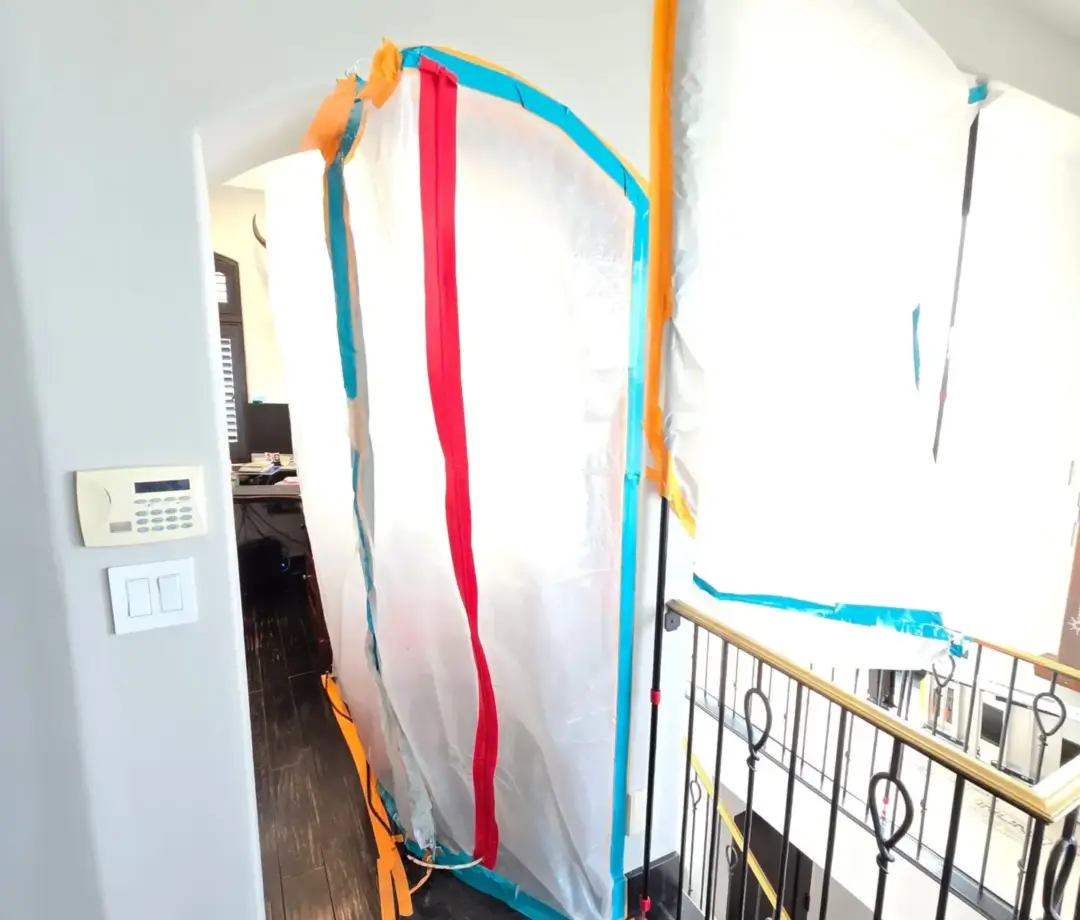
For the owner, mold that spreads means more square footage torn out, more drywall replaced, and a longer stretch with the unit off the market. Catching it behind the fridge is a bad afternoon. Catching it after it has moved into two rooms is a bad week. Our remediation process is built to contain the growth first so it stops traveling while we work.
For the tenant, it is health and disruption. Nobody wants to live around active mold, and nobody wants to pack up their bedroom because the problem spread. The faster it is contained, the less their life gets upended.
There is also a paper-trail reason to move quickly, which brings us to the next piece.
What to Document
Whether you own the unit or rent it, build a record. It protects you, and it makes our job cleaner too. Here is what to keep:
- Take photos the moment you notice anything, wide shots and close-ups both. We took around 593 on that Ventura job for a reason.
- Save every written message between landlord and tenant, especially the first report and any repair timelines, since dates matter if there is ever a dispute.
- Hold onto invoices and inspection notes.
- Write down what caused the moisture if you know it, because a fixed leak with no record has a way of being forgotten.
If you want a head start on catching the moisture that feeds mold in the first place, our water damage tips page is a plain-language place to start.
Short FAQ (Frequently Asked Questions)
How fast should mold in an apartment be dealt with? As soon as it is found. Mold spreads on its own timeline, and the Ventura job proves it, hidden behind a fridge and into a second room before anyone saw it. Days matter.
Is the landlord or the tenant responsible? Generally the landlord handles mold tied to leaks or building issues under California’s habitability rules, while tenants are usually expected to keep the place dry and report problems fast. Read your lease and check with a tenant rights resource. This is not legal advice.
Can you work directly with property managers? Yes. We work with landlords, tenants, and property managers, and we are used to coordinating between all three.
Talk to a Local Crew
We are a family-run team, and we have handled plenty of hidden mold across Ventura County. If you want it looked at before it finds the next room, just contact us. Whoever you are in the lease, we will be straight with you and get it dealt with.
Share
Lorem ipsum dolor sit amet, consectetur adipiscing elit. Ut elit tellus, luctus nec ullamcorper mattis, pulvinar dapibus leo.